Please provide the following items
(Not included with the kit)
- GPS device or phone to log coordinates
- A pencil to complete the datasheet
- A timer to record sampling duration
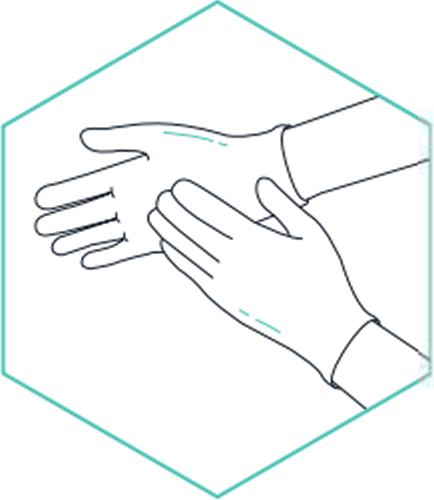
- If more than one person is using the kit, please provide each person with a mask and nitrile gloves.
USER PROTOCOL
Preparation

1. Define survey area: The two swabs in your kit can cover a maximum survey area of 10 square metres.
2. Attach barcodes to datasheet: Peel the barcode off each swab tube and stick it onto the designated areas on the datasheet. (To avoid contamination open only one kit at a time.)
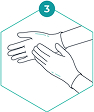
3. Put on the gloves and mask: Once gloves are on, to minimize contamination, do not touch your phone, face, or anything other than the sampling equipment and vegetation being swabbed. Change gloves between every new kit/location.
Swabbing
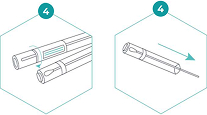
1. Prepare the first swab: Remove one of the swab tubes from the kit bag. Twist the lid on the tube to break the seal and pull the swab out. Keep the swab tube to store the used swab. Submerge the swab in the DNA preservation buffer for a few seconds.
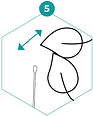
2. Swab for 3 minutes: With the now prepared swab, swab vegetation in the sample area for a minimum of 3 minutes. Apply firm pressure and twist the swab while swabbing a variety of different surfaces.
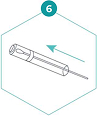
3. Seal the swab in its tube: Return the used swab to the swab tube and push the cap on to firmly seal the tube.
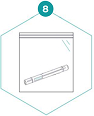
4. Repeat steps 1 & 2 for the second swab: Swab within the same sample area. When finished swabbing, place both used swab tubes into the specimen safety bag.
Post Swabbing
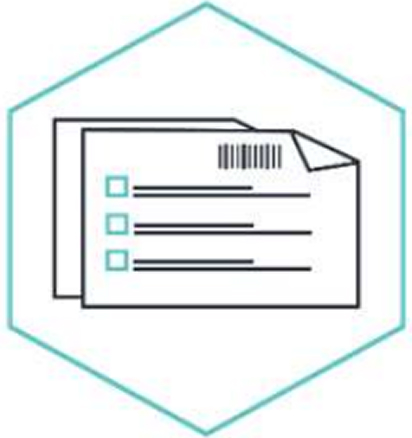
1. Complete your datasheet & sample manifest: Please use a pencil to complete your datasheet (during shipping pen ink can run and become unreadable). Use your datasheet to complete your sample manifest for all samples being shipped back to NatureMetrics.
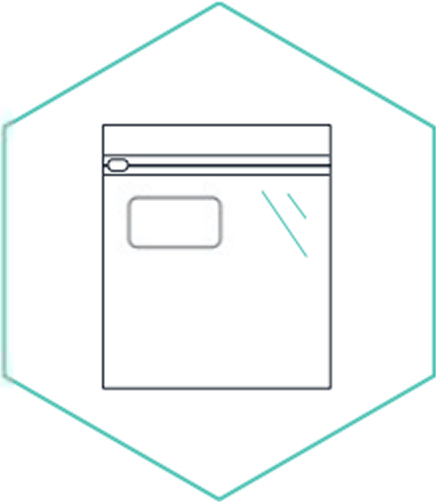
2. Pack datasheet & sample inside the specimen safety bag: Keep the datasheet information visible when in the bag (in case you need to refer to it later). Seal the specimen safety bag inside the original outer kit bag.
Top tip: Keep samples away from heat & sunlight: Both heat and sunlight can degrade eDNA. If storing your samples overnight (or longer) before shipping to our labs, please keep them refrigerated at between 2°C and 4°C. Samples can be stored for up to one month in the refrigerator, but should not be frozen or stored at ambient temperature. Please ship your samples to NatureMetrics as soon as possible.
3. Contact NatureMetrics to book the shipping of your samples: Contact support@naturemetrics.co.uk or submit your request online by contacting customer support (choose the option: ‘book a sample return’). To book your shipping you will need to provide us with your completed sample manifest.
Please always contact NatureMetrics to arrange the transport of your samples. NatureMetrics is fully compliant with current legislation on the transport of biological material and our team are on hand to ensure all return shipments meet the required specifications. Please note: we are only able to analyze samples that are returned using the correct NatureMetrics logistics procedure.
Top tips for surface swabbing
Wear the mask and gloves to avoid contamination: Avoiding contamination is vital to improving the confidence of results. The mask and gloves provided help to avoid contamination from your skin and breath, which can transfer onto surfaces or directly onto the swabs. Wear the mask and gloves before touching other kit components.
Avoid contamination and reduce human DNA. Contamination: A contaminated sample is one that contains DNA from outside of your sample. This can lead to erroneous species appearing in your sample results. The more contamination is controlled while sampling, the more accurate your results will be. Human DNA: The less human DNA in your sample, the better, as it can interfere with eDNA data generation. Try to minimize swabbing surfaces that are in direct contact with humans, such as park benches.
Wear the mask and gloves to avoid contamination: Avoiding contamination is vital to improving the confidence of results. The mask and gloves provided help to avoid contamination from your skin and breath, which can transfer DNA onto surfaces or directly onto the kit. Wear the mask and gloves before touching other kit components.
Be careful what you touch: While wearing the gloves, avoid touching anything that is not necessary to sampling. This will help minimize the introduction of external eDNA into your sample. Gloves should be changed between each kit.
Use one kit at a time: Sealed kits are sterile until opened. To avoid contamination, do not open more than one kit bag at a time and keep kit contents inside the bag before use. Once outside of the bag, kit contents can pick up additional, unwanted DNA.
Swab for 3 minutes: To obtain the best representation of the surrounding biodiversity, swab a variety of trees and vegetation for a minimum of 3 minutes.
Apply firm pressure: When swabbing vegetation, applying pressure will improve sample quality. If helpful, place a hand behind the leaf, stem, or flower while swabbing.
Include artificial structures: If vegetation is limited, you can also swab artificial structures such as walls or fences (not relevant if you are swabbing for pollinators).
Swab during dry weather: If possible, swab during periods of dry weather, as eDNA is more likely to accumulate in these conditions. Rainfall can wash away eDNA.
Avoid soil-covered areas: Try to avoid swabbing areas that are covered with soil.
Swabbing for mammals and birds: If you see signs of activity (foraging, grazing etc.) we recommend swabbing directly over these areas. Sampling lower down may increase the likelihood of collecting eDNA from ground-dwelling mammals.
Swabbing for pollinators: If you see plants in bloom, we recommend swabbing the flower heads and petals directly. Focusing on open flowers and the upper side of surfaces increases the likelihood of collecting eDNA left behind by visiting insects.
Location-specific compounds: Samples from some locations might have compounds that inhibit analyses resulting in reduced data generation.
More info: To learn more about how to optimize your sampling, read our advice note: how to avoid inconclusive results.
Shipping Info
Permits & permissions: Please note: samples cannot be moved across borders without permission, as they are classed as biological samples. Please ensure you have exports permits and any other relevant permissions from the necessary authorities in place before shipping your samples. If you require any assistance please contact us.
Return using the original packaging: Where possible, please return your samples using the box in which your kits were sent. If using an alternative box, ensure it is in good condition and remove any existing labels. Avoid samples moving around inside the box by filling excess space with cushioning material (e.g. bubble wrap or paper). Use good quality sealing tape and seal along box edges in a H pattern.
Recycling: The only essential items to send back to us are the specimen safety bag containing the swab tubes and the sampling datasheets. However, all kit contents can be sent back to NatureMetrics for recycling. More info.
Store away from heat & sunlight: Both heat and sunlight can degrade eDNA. If storing your samples overnight (or longer) before shipping to our labs, please keep them refrigerated at between 2°C and 4°C. Samples can be stored for up to one month in the refrigerator, but should not be frozen or stored at ambient temperature. Please ship your samples to NatureMetrics as soon as possible.
A note on results
- Failure to detect a species does not prove it is absent. The species may be present in the sample area, even if its DNA was not found in your specific sample.
- Species from common food items, domestic species and livestock species should to be interpreted with caution. DNA can enter an ecosystem via many routes (e.g. wastewater from commercial and domestic sources, human transportation etc.). While DNA from a given taxon may be present and detectable, it is not possible to discern the source of the DNA.
- Samples from some locations might have compounds that inhibit analyses resulting in reduced data generation.
Disclaimer: Safe sample collection is the responsibility of the Client. NatureMetrics accepts no liability associated with the use of the kits and sample collection. The Client is solely responsible for the quality of the samples and the representativeness of the samples received by NatureMetrics. The information contained within the insights reporting provided by NatureMetrics to the Client are not intended to be advisory, they are informational. Interpretation and decisions are the sole responsibility of the Client. NatureMetrics does not accept any liability whatsoever for any reliance placed on any information contained within, or any use that may be made of, the insights reporting, by the Client. Please read the full limitation of liability statement in the Terms and Conditions.
Health & Safety information for this kit can be viewed here.